
Cognitive Interview Training: Building Accuracy Without Contaminating Memory

Updated: Apr 17
In the realm of investigative interviewing, precision and reliability are paramount. The ability to extract accurate, detailed information from witnesses or suspects can make the difference between solving a case and hitting a dead end. Over the years, research in human memory and psychology has led to the development of advanced interviewing methods that enhance recall without compromising the integrity of the information. Among these, cognitive interview training stands out as a scientifically validated approach that equips professionals with the tools to conduct interviews that are both ethical and effective.
This article delves into the principles and practices of cognitive interview training, offering practical insights and actionable recommendations for those engaged in high-stakes information gathering. Drawing on decades of peer-reviewed research and the expertise of The Investigative Interview Institute (The Geiselman Group), I will guide you through the essential components of mastering this art.
The Importance of Cognitive Interview Training in Investigations
Effective interviewing is not just about asking questions; it is about understanding how memory works and how to facilitate its retrieval. Cognitive interview training provides a structured framework that helps interviewers maximize the amount and accuracy of information obtained from witnesses and victims. This training is grounded in scientific principles of memory encoding, consolidation, and retrieval, ensuring that the information collected is as reliable as possible.
One of the key benefits of cognitive interview training is its focus on minimizing interviewer bias and leading questions. By adopting techniques that encourage open-ended responses and detailed recollections, interviewers can avoid contaminating the witness’s memory. This is crucial in legal and investigative contexts where the integrity of testimony can be challenged.
For example, instead of asking, "Did you see the suspect with a red jacket?" an interviewer trained in cognitive methods might say, "Can you describe what the person you saw was wearing?" This subtle shift encourages the witness to provide information without suggestion, reducing the risk of false memories.

What is a cognitive interviewing technique?
At its core, the cognitive interviewing technique is designed to enhance the retrieval of accurate memories by leveraging how the human brain processes and recalls information. Developed through extensive research, this method involves several key components:
Context Reinstatement - Encouraging the interviewee to mentally recreate the environment and context of the event. This might include sensory details such as sights, sounds, and smells, which can trigger more vivid memories.
Report Everything - Asking the interviewee to report all details, no matter how trivial they may seem. Sometimes minor details can provide critical leads or corroborate other evidence.
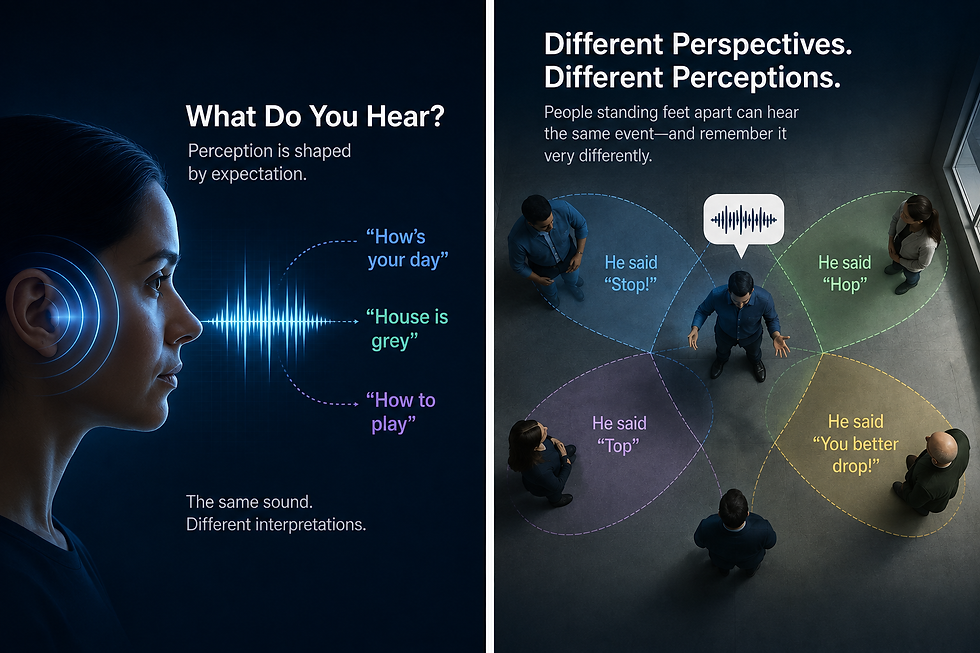
Recall from Different Perspectives - Inviting the interviewee to recall the event from multiple viewpoints, such as imagining what another witness might have seen. This can uncover additional information that might otherwise be overlooked.
Recall in Different Orders - Requesting the interviewee to recount the event in various sequences, such as backward or from the middle to the beginning. This technique helps to disrupt any rehearsed or fabricated narratives and can reveal inconsistencies.
These components work synergistically to improve the quantity and quality of information retrieved. The technique is not about interrogating but about facilitating memory retrieval in a supportive and non-coercive manner.
Practical Steps to Implement Cognitive Interview Training
Implementing cognitive interview training requires a commitment to understanding both the science behind memory and the practical skills of interviewing. Here are some actionable steps to integrate this approach into your professional practice:
Engage in Formal Training Programs
Seek out evidence-based courses offered by reputable organizations such as The Cognitive Interview Institute. These programs provide hands-on experience and direct instruction from experts, including Dr. Edward Geiselman, co-creator of the Cognitive Interview.
Practice Active Listening
Develop the ability to listen attentively without interrupting or leading the interviewee. This creates a safe environment where the interviewee feels comfortable sharing detailed information.
Use Open-Ended Questions
Frame questions that encourage elaboration rather than simple yes/no answers. For example, "Tell me everything you remember about the event" invites a fuller narrative.
Incorporate Contextual Cues
Guide the interviewee to mentally reconstruct the scene by asking about environmental details, emotions, and sensory experiences.
Avoid Interruptions and Judgments
Allow the interviewee to speak freely without interjecting or expressing disbelief. This helps maintain the flow of memory retrieval.
Record and Review Interviews
Whenever possible, record interviews to analyze the effectiveness of your techniques and identify areas for improvement.
By consistently applying these steps, interviewers can enhance their ability to gather comprehensive and accurate information, which is critical in investigations.

The Science Behind Memory and Its Role in Interviewing
Understanding the cognitive processes involved in memory is essential for mastering effective interviewing techniques. Memory is not a perfect recording of events but a reconstructive process influenced by various factors.
Encoding is the initial perception and registration of information. Factors such as stress, attention, and environmental distractions can affect how well an event is encoded.
Consolidation refers to the stabilization of memory traces over time. Sleep and emotional significance play roles in how memories are consolidated.
Retrieval is the process of accessing stored memories. This is where cognitive interviewing techniques have the most impact, as they facilitate the conditions that improve recall accuracy.
Research shows that traditional interview methods often lead to incomplete or distorted memories due to stress, leading questions, or poor interview techniques. Cognitive interviewing addresses these issues by creating an environment that supports the natural processes of memory retrieval.
For instance, asking a witness to close their eyes and visualize the scene can activate sensory memories that might otherwise remain inaccessible. Similarly, encouraging the recall of peripheral details can trigger the retrieval of central facts.
Enhancing Interview Outcomes with Ethical and Scientific Practices
Ethics and scientific rigor are foundational to the practice of cognitive interview training. The goal is not only to obtain information but to do so in a manner that respects the rights and dignity of the interviewee while maintaining the integrity of the data collected.
Avoid Coercion and Pressure
Ethical interviewing respects the autonomy of the interviewee. Techniques that pressure or manipulate can lead to false memories or confessions.
Maintain Neutrality
Interviewers should remain impartial, avoiding expressions of approval or disapproval that might influence responses.
Use Evidence-Based Methods
Rely on techniques validated by peer-reviewed research rather than anecdotal or untested approaches.
Continuous Professional Development
Stay updated with the latest research and training opportunities to refine skills and knowledge.
By adhering to these principles, interviewers contribute to a justice system that values truth and fairness.
Advancing Your Skills with The Investigative Interview Institute®
For professionals committed to excellence in investigative interviewing, The Investigative Interview Institute offers unparalleled training grounded in decades of scientific research. Their courses cover the Original Cognitive Interview, Enhanced Cognitive Interview, and the Veritas Method©, each designed to deepen understanding of memory processes and improve interviewing outcomes.
Training is available through various formats, including in-person workshops, online modules, keynote presentations, and customized programs tailored to specific organizational needs. This flexibility ensures that professionals across law enforcement, legal, healthcare, and military fields can access the knowledge and skills necessary to excel.
Investing in cognitive interview training through a reputable institution not only enhances individual capabilities but also elevates the standards of investigative practice as a whole.
Mastering the art of cognitive interview training is a journey that combines scientific knowledge with practical skill. By embracing evidence-based techniques and ethical standards, professionals can significantly improve the accuracy and reliability of the information they gather. This, in turn, supports the pursuit of justice and the protection of memory integrity in high-stakes environments.
For those ready to elevate their interviewing expertise, exploring formal training opportunities with The Investigative Interview Institute is a critical next step. The science is clear, and the benefits are profound - it is time to master this essential skill.


Comments