
Effective Techniques in Cognitive Interview Training
- Michael Albin

- Jun 3
- 4 min read
In the realm of investigative interviewing, the ability to extract accurate and detailed information from witnesses and victims is paramount. Over the years, cognitive interview training has emerged as a scientifically validated approach that enhances memory retrieval and improves the quality of information gathered. Drawing on decades of peer-reviewed research and practical application, this method equips professionals with tools to conduct interviews that respect memory integrity and ethical standards.
Understanding and applying effective techniques in cognitive interviewing is essential for law enforcement, investigators, and interview professionals who seek to optimize their investigative outcomes. In this article, I will share insights into the core principles, practical strategies, and the science behind this powerful interviewing method.
The Importance of Cognitive Interview Training
Cognitive interview training is not just another interviewing technique; it is a comprehensive approach grounded in cognitive psychology and human memory research. The training focuses on how memories are encoded, consolidated, and retrieved, enabling interviewers to facilitate more accurate and detailed recall.
Through specialized training programs, such as those offered by The Investigative Interview Institute (The Geiselman Group), professionals learn to:
Build rapport and create a supportive interview environment
Use open-ended questions that encourage detailed responses
Employ memory retrieval techniques that reduce errors and omissions
Avoid leading questions and suggestive language that can contaminate memory
This training is designed to be accessible and relevant to professionals working in high-stakes environments, including law enforcement, legal fields, healthcare, and military operations. The goal is to enhance investigative effectiveness while maintaining ethical standards and protecting the integrity of witness memory.

What is the Cognitive Interviewing Method?
The cognitive interviewing method is a structured approach to interviewing that leverages our understanding of how memory works. Developed through rigorous scientific research, it aims to improve the quantity and quality of information recalled by witnesses and victims.
At its core, the method involves several key components:
Context Reinstatement - Encouraging the interviewee to mentally recreate the environment and emotional state present during the event. This helps trigger memory cues.
Report Everything - Asking the interviewee to report all details, no matter how trivial they may seem, as small details can lead to important information.
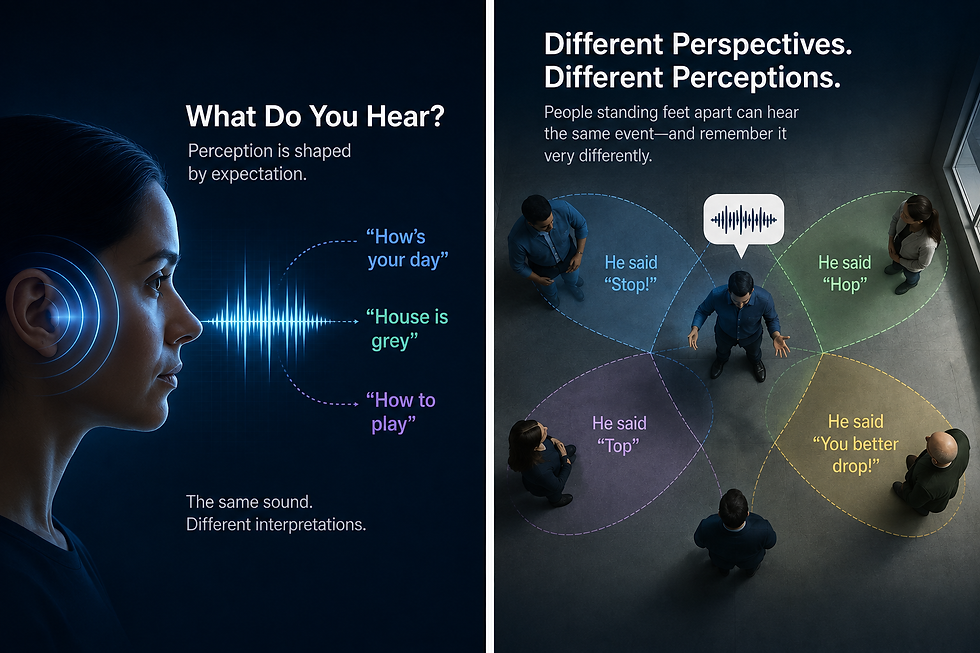
Recall from Different Perspectives - Requesting the interviewee to describe the event from various viewpoints, such as what others might have seen or heard.
Recall in Different Temporal Orders - Encouraging the interviewee to recount the event in reverse or non-chronological order to access different memory pathways.
These techniques are designed to reduce memory distortion and increase the completeness of the information gathered. The method also emphasizes the importance of a non-judgmental and patient interviewing style, which helps build trust and reduces anxiety for the interviewee.
Practical Techniques to Enhance Memory Retrieval
Implementing cognitive interviewing techniques effectively requires practice and attention to detail. Here are some actionable recommendations that I have found invaluable in my experience:
1. Establish a Comfortable Environment
Creating a calm and supportive atmosphere is crucial. Interviewees are more likely to recall information accurately when they feel safe and respected. Use a quiet room with minimal distractions and maintain a neutral, empathetic demeanor.
2. Use Open-Ended Questions
Avoid yes/no questions. Instead, ask questions that encourage elaboration, such as:
"Can you describe what you saw?"
"What happened next?"
"How did you feel at that moment?"
This approach allows the interviewee to provide richer, more detailed accounts.
3. Apply Context Reinstatement
Guide the interviewee to mentally revisit the scene of the event. Ask them to think about:
The sights, sounds, and smells present
Their physical and emotional state
The weather or lighting conditions
This mental exercise can unlock memories that might otherwise remain inaccessible.
4. Encourage Reporting of All Details
Even seemingly insignificant details can be critical. Encourage the interviewee to share everything, emphasizing that no detail is too small or irrelevant.
5. Vary Recall Techniques
Ask the interviewee to describe the event from different perspectives or in different orders. This can help uncover additional information and reduce the risk of memory contamination.
6. Avoid Interruptions and Leading Questions
Let the interviewee speak without interruption. Silence is okay. It provides the interviewee critical time to search their memory. Avoid suggesting answers or confirming details prematurely, as this can influence memory recall negatively.

Integrating Science and Practice in Interviewing
The strength of cognitive interviewing lies in its foundation in cognitive science. Understanding how memory works allows interviewers to tailor their approach to maximize recall accuracy.
For example, memory is not a perfect recording but a reconstructive process. Stress, trauma, and time can all affect how memories are stored and retrieved. Cognitive interview training addresses these challenges by teaching techniques that:
Minimize the impact of stress on recall
Help reconstruct fragmented memories
Reduce the likelihood of false memories or confabulation
By applying these principles, interviewers can gather more reliable information, which is critical in investigations where accuracy can affect outcomes significantly.
Advancing Your Skills with Professional Training
To master these techniques, formal training is essential. The Investigative Interview Institute offers evidence-based courses that provide:
Direct instruction from experts, including Dr. Edward Geiselman, co-creator of the Cognitive Interview
Hands-on practice with feedback
Access to the latest research and developments in investigative interviewing
Customizable programs tailored to specific professional needs
Engaging in such training ensures that interviewers are equipped with the most effective and ethical methods available. It also fosters a deeper understanding of human memory, which is invaluable in high-stakes interviews.
For those interested in exploring these methods further, I recommend reviewing cognitive interviewing techniques to gain a comprehensive understanding of the approach.
Enhancing Investigative Outcomes Through Cognitive Interviewing
Incorporating cognitive interviewing techniques into your investigative toolkit can transform the quality of information you obtain. By focusing on memory science and ethical interviewing practices, you can:
Increase the amount of accurate information recalled
Reduce errors and memory contamination
Build rapport and trust with interviewees
Support fair and just investigative processes
The benefits extend beyond individual interviews, contributing to more effective investigations and better outcomes in legal and security contexts.
By committing to ongoing education and practice in cognitive interview training, professionals can stay at the forefront of investigative interviewing excellence.
Mastering these effective techniques in cognitive interviewing is a vital step toward enhancing your investigative capabilities. The science-based methods taught by The Investigative Interview Institute provide a robust framework for ethical, accurate, and comprehensive information gathering. I encourage you to explore these techniques further and integrate them into your professional practice to achieve the highest standards of investigative interviewing.


Comments