
Mastering Investigative Interviewing Methods: A Guide to Cognitive Interviewing for Investigations

In the realm of investigations, the ability to extract accurate and detailed information from witnesses and suspects is paramount. Over the years, various investigative interviewing methods have been developed to enhance the quality of information gathered. Among these, the cognitive interview stands out as a scientifically validated technique that leverages the principles of human memory to improve recall. Drawing on decades of peer-reviewed research and practical application, mastering this method can significantly elevate the effectiveness of investigative interviews.
Understanding Investigative Interviewing Methods
Investigative interviewing methods are structured approaches designed to facilitate the retrieval of reliable information during interviews. These methods are grounded in psychological research and aim to minimize errors such as memory contamination, suggestibility, and interviewer bias.
The cognitive interview, in particular, is unique because it focuses on enhancing memory retrieval by recreating the context of the event and encouraging detailed recall without interruption. This method is especially valuable in law enforcement and legal settings where the accuracy of witness testimony can influence case outcomes.
To implement effective investigative interviewing methods, it is essential to understand the cognitive processes involved in memory encoding, storage, and retrieval. Interviewers trained in these methods learn to create an environment that supports the interviewee’s natural memory functions, thereby increasing the quantity and quality of information obtained.

What is a cognitive interviewing technique?
The cognitive interviewing technique is a method developed to improve the accuracy and completeness of witness recollections. It is based on the understanding that memory is reconstructive and can be influenced by how questions are asked and the context in which information is retrieved.
This technique involves several key components:
Context Reinstatement - Encouraging the interviewee to mentally recreate the physical and emotional environment of the event.
Report Everything - Asking the interviewee to report all details, regardless of perceived importance.
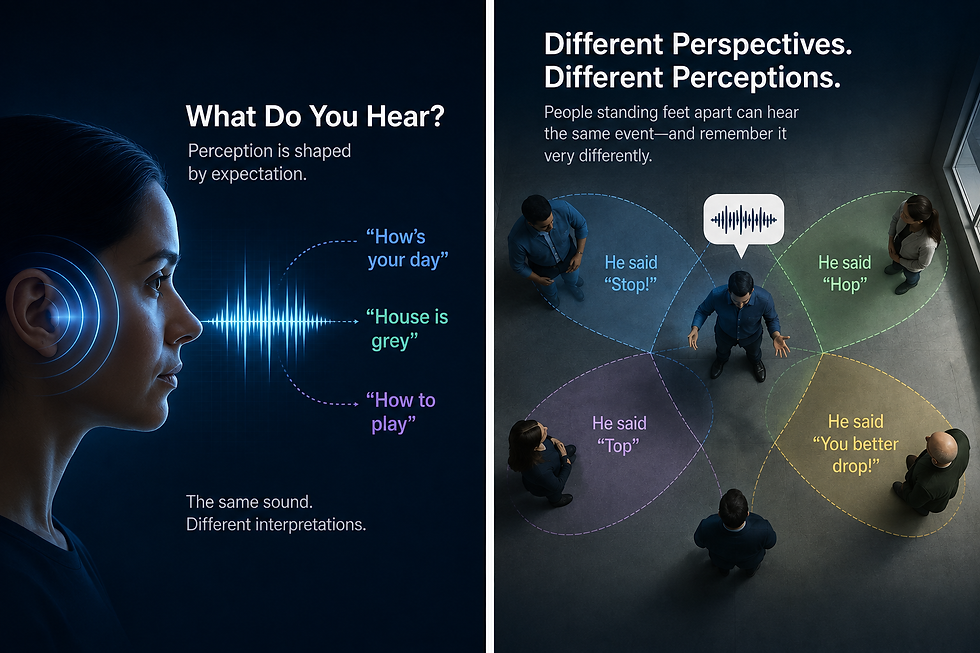
Recall from Different Perspectives - Requesting the interviewee to describe the event from multiple viewpoints.
Recall in Different Orders - Having the interviewee recount the event in various sequences to trigger additional memories.
By applying these components, interviewers can access memories that might otherwise remain inaccessible through traditional questioning. The technique reduces the risk of leading questions and helps maintain the integrity of the information collected.
Practical Applications of Cognitive Interviewing in Investigations
In practice, cognitive interviewing requires skillful execution and a thorough understanding of human memory. Here are actionable recommendations for applying this technique effectively:
Prepare the Interview Environment: Ensure a quiet, comfortable setting free from distractions. This helps the interviewee focus and reduces stress, which can impair memory retrieval.
Build Rapport: Establish trust and explain the purpose of the interview. A relaxed interviewee is more likely to provide detailed and accurate information.
Use Open-Ended Questions: Avoid yes/no questions. Instead, prompt the interviewee to describe events in their own words.
Allow for Pauses: Give the interviewee time to think and recall without interruption. Silence can encourage deeper memory retrieval.
Avoid Leading or Suggestive Questions: Maintain neutrality to prevent contamination of the witness’s memory.
Record the Interview: Use audio or video recording to capture details accurately and allow for later review.
For example, when interviewing a witness to a robbery, instead of asking "Did you see the suspect’s face clearly?" you might say, "Please describe everything you remember about the person involved." This approach encourages a fuller narrative and reduces the risk of influencing the witness’s memory.

Training and Expertise in Cognitive Interviewing
Mastering cognitive interviewing is not simply about knowing the steps; it requires comprehensive training and practice. The Investigative Interview Institute (The Geiselman Group) offers specialized courses that delve into the science of memory and the practical application of investigative interviewing methods. These courses are designed for law enforcement, legal professionals, healthcare, military, and other high-stakes fields.
Training includes:
Understanding memory encoding, consolidation, and retrieval processes.
Learning the Original Cognitive Interview and Enhanced Cognitive Interview techniques.
Applying the Veritas Method© for advanced investigative interviewing.
Hands-on practice with feedback from experts, including Dr. Edward Geiselman, co-creator of the Cognitive Interview.
Such training ensures that interviewers are equipped to conduct interviews ethically and effectively, preserving the integrity of memory and maximizing the accuracy of information gathered.
Enhancing Investigative Outcomes Through Science-Based Interviewing
The integration of science-based investigative interviewing methods, such as the cognitive interviewing technique, represents a significant advancement in investigative practice. By grounding interviews in empirical research, professionals can reduce errors, improve witness cooperation, and ultimately contribute to more just outcomes.
Incorporating these methods into standard investigative protocols requires commitment to ongoing education and adherence to ethical standards. The benefits, however, are substantial:
Increased retrieval of accurate and detailed information.
Reduced risk of false memories and wrongful convictions.
Enhanced credibility of witness testimony in legal proceedings.
Improved rapport and communication between interviewers and interviewees.
By mastering these investigative interviewing methods, professionals can elevate their investigative capabilities and contribute to the pursuit of truth and justice.
Mastering investigative interviewing methods is a continuous journey that demands dedication to scientific principles and ethical practice. The Investigative Interview Institute (The Geiselman Group) stands at the forefront of this field, offering evidence-based training that empowers professionals to protect memory integrity and conduct interviews that yield reliable, actionable information.


Comments