
Understanding Memory Contamination and Confabulation: Navigating Truth and Deception
- Michael Albin

- May 20
- 4 min read
Updated: Jul 6
Memory shapes how we understand the world and ourselves. Yet, our memories are not perfect recordings of events. They can be influenced, altered, or even fabricated without our awareness. Two key concepts that explain these phenomena are memory contamination and confabulation. Understanding how these processes work helps us distinguish between what truly happened and what might be a distorted or false recollection.
Memory contamination occurs when information outside a person’s original experience becomes mixed into their memory. Confabulation involves the brain filling in gaps in memory with fabricated or distorted details, often without the person realizing it. Both can make it difficult to tell truth from deception, even when the person genuinely believes their memory is accurate.
How Memory Contamination Happens
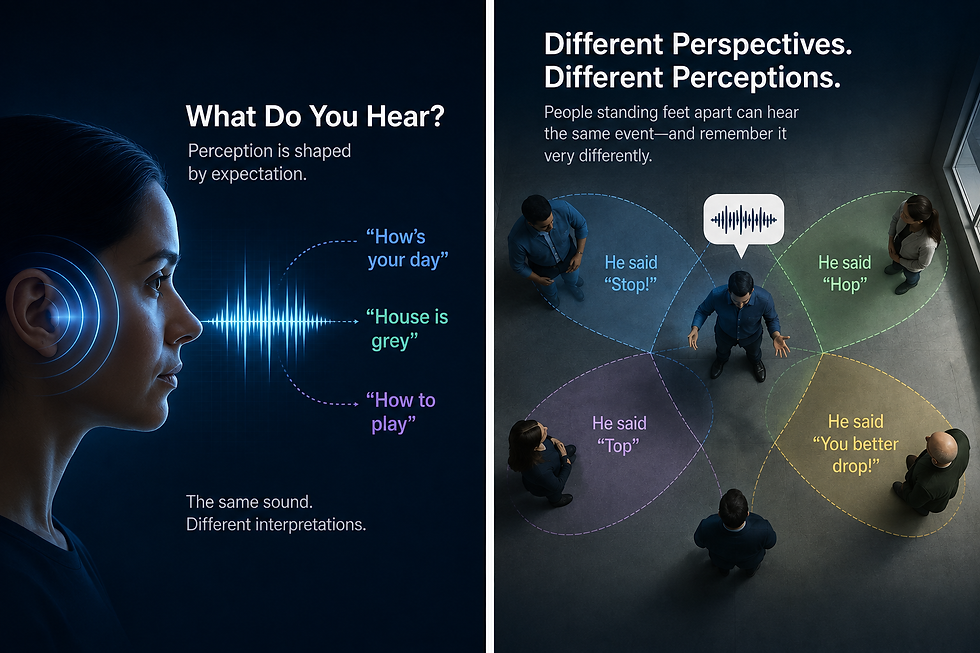
When a person experiences an event, their brain records a combination of sensory input, emotions, and attention at that moment. However, no one can be fully aware of every detail around them. This limited attention means some parts of the experience are not encoded clearly or at all.
Later, when recalling the event, the brain tries to reconstruct the memory. During this process, external information—such as suggestions from others, conversations about the event, media reports, reading about the event, social media comments or posts, or even personal assumptions—can slip into the memory. This is memory contamination.
For example, imagine a witness to a car accident who only saw the crash from a distance. Later, after hearing other witnesses describe the accident, the person might incorporate those details into their own memory. Even if those details were inaccurate or exaggerated, the witness’s memory now contains elements they never actually perceived.
Memory contamination can happen through:
Leading questions during interviews or conversations
Exposure to media coverage or photos after the event
Discussions with others who were present or heard about the event
Personal biases or expectations influencing how details are remembered
Because the brain tries to create a coherent story, unconsciously, it often accepts these outside details as part of the original memory, unknown to the individual. These contaminated details are not intentional deception.
What Confabulation Means in Memory
Confabulation is different but related. It refers to the brain’s tendency to fill in missing pieces of memory with created or distorted information. The human brain does not like ambiguity and works diligently to solve this problem. This usually happens when a person has gaps in their memory due to selective attention, inattentional blindness, perceptual narrowing (tunnel vision), or simply forgetting.
Unlike lying, confabulation is not intentional deception. The person truly believes their memory is accurate. The brain creates these false details to maintain a sense of continuity and make sense of incomplete information.
For example, a person with memory loss might describe an event with vivid but incorrect details, unaware that parts of their story are fabricated. This can happen in conditions like amnesia, dementia, or after brain trauma.
Confabulation often involves:
Inserting plausible but false details to fill memory gaps
Mixing real memories with imagined ones
Creating stories that feel emotionally or logically consistent
This process helps the brain avoid the discomfort of not knowing or forgetting, but it can lead to false memories.

Distinguishing Truth from Deception in Memory
Since memory contamination and confabulation can alter what we remember, how can we tell what is true?
Corroborate with multiple sources
Cross-check memories with other eyewitnesses, physical evidence, or recordings. Consistency across multiple independent sources increases confidence in accuracy.
Consider the context of recall
Memories recalled soon after an event, post-consolidation, tend to be more accurate. The longer the delay, the more chance for contamination or confabulation.
Be aware of suggestive influences
Avoid leading questions or sharing details before asking someone to recall an event. This reduces the risk of introducing false information.
Look for internal inconsistencies
Confabulated memories often have contradictions or vague details. Careful and consistent questioning can reveal these gaps.
Understand emotional impact
Strong emotions can both enhance and distort memory. Stress or trauma might cause fragmented or altered recollections.
Use professional assessment when needed
In legal or clinical settings, trained experts use specialized techniques to evaluate memory reliability.
Why Memory Contamination Matters
Memory contamination is not just an academic concept. It has real-world consequences:
Legal cases rely heavily on eyewitness testimony, which can be contaminated and unreliable.
Therapy and counseling must consider how memories might be influenced by suggestion or reconstruction.
Everyday misunderstandings can arise when people remember shared events differently.
Recognizing that memory is malleable and associative helps us approach recollections with healthy skepticism and care.
Practical Tips to Protect Your Memories
Write down important details soon after an event to capture your original perception.
Limit exposure to others’ accounts before recalling your own memory.
Ask open-ended questions when discussing memories to avoid leading answers.
Be patient with yourself and others when memories differ; it’s natural for details to vary.
Seek professional help if memory issues affect daily life or cause distress.
The Importance of Understanding Memory Dynamics
Understanding memory dynamics is crucial for professionals involved in investigations and interviews. The implications of memory contamination and confabulation extend beyond individual cases. They influence the integrity of the information gathered during interviews and the subsequent decisions made based on that information.
By recognizing the potential for memory distortion, we can better prepare ourselves to conduct interviews that minimize the risk of contamination. This involves using techniques that promote accurate recall and reduce suggestive influences.
Incorporating evidence-based practices into our interviewing techniques not only enhances the reliability of the information obtained but also upholds the ethical standards of our profession.
In conclusion, the complexities of memory, including contamination and confabulation, highlight the need for a nuanced understanding of how memories are formed and recalled. By applying this knowledge, we can improve our investigative practices and ensure that the information we gather is as accurate and reliable as possible.
For more insights on effective interviewing techniques, visit The Investigative Interview Institute.


Comments